
Unique Crochet Patterns Free: How to Find, Adapt, and Sell Your Own Designs
Micro-trend we keep seeing lately, customers want "the thing everyone has", but with one detail that's only theirs. A different ear shape. A new color fade. A fun pocket. That's why searches for unique crochet patterns free are popping up from makers who want to sell without copying anyone.
Here's the honest truth from our crochet bench: most "free" patterns aren't automatically safe to sell from, and most "unique" items aren't built from scratch. The sweet spot is picking a solid free base, checking the permission, then adding changes that are big enough to make the finished item feel like your work.
Unique Crochet Patterns Free: What "Free" Really Means Before You Sell
A free pattern can be free in two different ways, and only one of them helps your shop.
1) Free to read: The designer posts it on a blog or social post. You don't pay money, but you still must follow their rules.
2) Free to use commercially: The designer clearly says you can sell items made from the pattern (often with credit). That's the permission you're looking for.
Before you crochet a whole batch, do this quick license check. It saves so much headache later.
- Look for "Terms of use", "Copyright", or "Permissions" near the pattern.
- Find the line about selling finished items. If it says "no sales" or "personal use only", stop there.
- Watch for required credit wording. Some designers want a specific sentence in your listing.
- Don't repost the pattern. Even if you can sell the finished item, you usually can't copy-paste the instructions.
- If it's unclear, assume no. Or message the designer and keep the reply.
One more detail most people miss: even if selling is allowed, the designer may limit it (example: "small-scale sales only"). If you're planning a big drop or wholesale, pick a pattern with clear commercial terms.
Next, you need a way to turn "everyone's free pattern" into "your signature product" without crossing lines.
A Step-By-Step Method to Turn a Free Pattern Into Something Customers Recognize as Yours
You don't need to rewrite every stitch to make something feel original. You need changes customers can see, plus changes that improve the experience (fit, durability, washability).
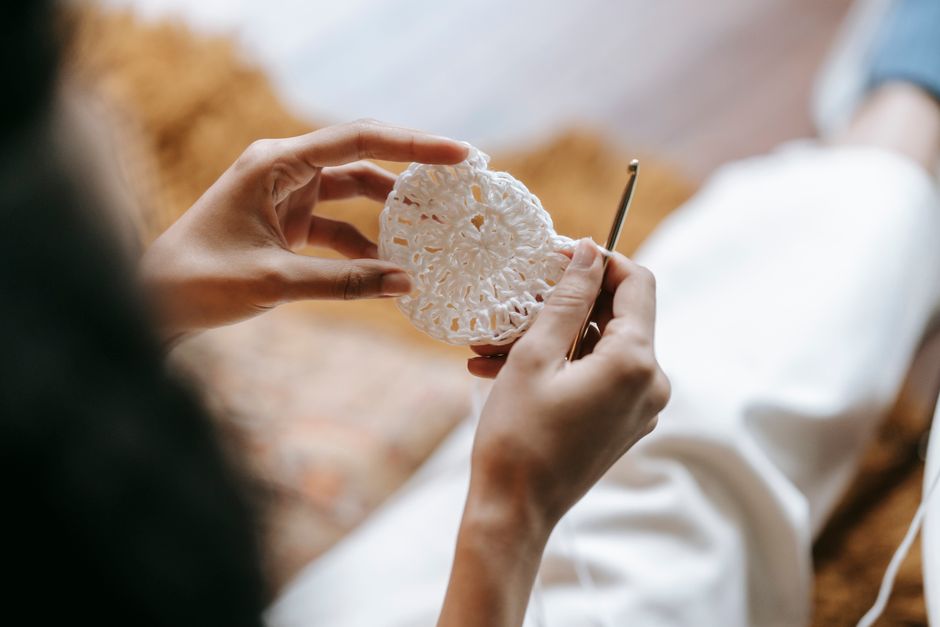
Use this process every time.
- Choose a base pattern with clean shaping. Good shaping is harder than cute details. Let the base do the heavy lifting.
- Pick one "identity feature" and push it. This is the part people notice from across the room. Examples: oversized eyes, a dramatic ruffle collar, extra-long limbs, a bold stripe placement, a tiny backpack.
- Add one "quality upgrade" customers feel. Stronger seams, better stuffing control, a nicer edge finish, or a cleaner color change.
- Make one "seller upgrade" that helps you produce. Fewer ends to weave, a repeatable color system, or a piece you can batch.
- Rename your finished item honestly. You can describe the vibe and features, but don't use the original pattern name if that causes confusion.
Here are adaptation levers that usually create real difference without breaking the base structure.
- Silhouette tweaks: longer body, shorter snout, chunkier legs, deeper hat brim.
- Surface design: embroidery, appliqué patches, spike rows, bobbles, tapestry-style color blocks.
- Texture swaps: smooth yarn for the body, fluffy yarn for mane or trim.
- Functional add-ons: keychain loop, pocket, removable scarf, snap-on wings.
If you want the "advanced" path, learn the mechanics behind these changes. We wrote a full guide for makers who want to control shaping on purpose: crocheting intricate designs without losing your place.
Now let's make this concrete with a worked example, including the trade-offs.
Worked Example: One Free Plush Pattern, Three Sellable Variations (with Trade-Offs)
Let's say your base is a simple free amigurumi (stuffed toy) animal pattern with a round head, oval body, and small limbs. You want three products that look related (great for a shop), but not identical.
Variation 1: "the Minimalist" (Fastest to Make)
Identity feature: clean two-tone color blocking.
Quality upgrade: invisible decrease placement (so the head stays smooth).
Seller upgrade: change to a no-sew ear method (crochet ears directly onto the head) if the base pattern allows it.
Trade-offs:
- Pros: fastest production, fewer parts to lose, clean photos.
- Cons: simple look means your yarn choice matters more, cheap yarn looks cheap.
Variation 2: "the Collector" (Highest Perceived Value)
Identity feature: a removable accessory set, like a tiny hat + scarf.
Quality upgrade: reinforce accessory joins (weave ends twice and lock them), and use a firmer stuffing in the neck area so the head sits right.
Seller upgrade: accessories are batchable. You can make ten scarves in one sitting.
Trade-offs:
- Pros: customers love add-ons, it feels gift-ready.
- Cons: more pieces means more time per order, more chances to misplace parts.
Variation 3: "the Sensory" (Texture Sells It)
Identity feature: texture contrast, like fluffy yarn for a mane, belly, or ears.
Quality upgrade: add a lining round or slip-stitch edge to stop shedding fibers at the seam.
Seller upgrade: keep the fluffy yarn limited to one area, so you don't fight it the whole project.
Trade-offs:
- Pros: texture reads as premium in photos, even in simple shapes.
- Cons: fluffy yarn hides stitches, counting is harder, frogging (undoing) is annoying.
Non-obvious selling tip: when you create three variations, keep one measurement consistent (like total height). That makes your listings cleaner and helps repeat buyers.
If you want to compare pattern formats (PDF vs blog vs video) and how they affect your success rate, our shop-focused breakdown helps: choosing the right crochet pattern format for your project.
Now let's talk about pricing and production, because "free pattern" doesn't mean "cheap to make."
Pricing and Production: a Simple Decision Framework for What to Sell
We see makers get stuck here. They pick the cutest idea, then realize it takes forever, or the materials eat the profit.

Use this choose-A-or-B framework.
Choose "Fast Sellers" If You Need Consistent Income
Pick designs that are:
- One main color plus one accent
- Minimal sewing
- Repeating rounds, not lots of short rows
- Easy to size consistently
Best products: small plushies, coasters, simple hats, keychains, basic pouches.
Choose "Statement Pieces" If You Want Higher Prices Per Item
Pick designs that are:
- Visually complex (but still repeatable)
- Feature texture, shaping, or accessories
- Photograph well with close-ups
Best products: detailed plushies, wearable hoods, bags with structured bases, character-inspired (but original) creatures.
Choose "Customizable Templates" If You Want Repeat Buyers
This is our favorite shop strategy. Build one base, then sell options.
- Same body, different colors and faces
- Same hat, different appliqués
- Same bag, different strap and border
It gives you speed and variety at the same time.
A practical cost check (do this before you list): crochet the item once, time yourself, and write down the yarn weight (how much yarn you used). If the time feels too high, simplify before you fall in love with the design.
If you need help picking yarn that holds up to handling and shipping, our yarn guide is built for sellers: how different crochet yarn types affect stuffed toy quality.
Common Mistakes That Get Sellers Into Trouble (and Easy Fixes)
Most issues aren't about crochet skill. They're about permission, clarity, and consistency.
Mistake 1: Assuming "Free" Means "No Rules"
Fix: Only sell from patterns that clearly allow it, or from your own original instructions.
Mistake 2: Making Tiny Changes and Calling It a New Pattern
Fix: Focus on visible identity features. If a customer can't tell the difference at a glance, it's not a strong variation.
Mistake 3: Using Trademarked Names in Listings
Fix: Describe the item without protected names. Talk about colors, shapes, and vibe. Stay original.
Mistake 4: No Consistent Finish Standard
Fix: Write yourself a "shop standard" checklist.
- Same eye placement method every time
- Same seam style for limbs
- Same stuffing firmness
- Same tag or packaging style
Consistency is what makes handmade feel professional.
FAQ
Can I Sell Items Made From a Free Crochet Pattern?
Sometimes. You can only do it if the designer says you can sell finished items. If it's unclear, ask for permission in writing.
Can I Post the Free Pattern in My Own Shop or on Social Media?
Usually no. Even with commercial permission, most designers don't allow reposting the instructions. You can share a link to the original pattern instead.How Much Do I Need to Change to Call It "My Design"?
There's no magic number. Aim for changes that affect the look and the making process, like silhouette, texture, and construction choices. Tiny tweaks, like one color swap, rarely feel original.What If I Want to Sell the Actual Pattern, Not Just the Finished Item?
That's a different goal. Start from your own written instructions and photos. If you learned from a free pattern, don't repackage it. Build a new pattern from scratch and test it.Make Your Next "Free" Find Actually Worth Selling
The best path is simple: find a free pattern with clear selling permission, then add one identity feature, one quality upgrade, and one production upgrade.
If you want patterns that are built for great results (and less trial and error), browse what we're designing and releasing at https://artncraftartncraft.art, and keep an eye out for pattern drops that are made for sellers, not just hobby projects.