
Master 5 Crochet Stitches to Create Unique Patterns for Sale
Most crochet patterns that "don't sell" aren't badly written. They're just built from the same two or three textures everyone's already seen.
If you want shoppers to stop scrolling, your stitch choices need to do more than fill space. The right crochet stitches create shape, texture, and clean photos, and they can make a simple item feel like your signature.
Below are five stitches we rely on constantly when designing patterns for sale, plus a practical way to combine them into something that looks unique without making the pattern hard to follow.
The 5 Stitches That Give You the Most Design Range
You don't need 50 techniques to design sellable patterns. You need a small set you can "bend" in different ways, like changing yarn, hook size, or stitch placement.
Here are the five crochet stitches that give the biggest payoff in texture and structure.
1) Single Crochet (Sc) for Clean Shape and Tight Fabric
Single crochet is your control stitch. It makes a dense, sturdy fabric that shows shaping clearly, which is why it's the backbone of amigurumi (stuffed crochet).
Use it when you need:
- Crisp curves and stable edges
- Small details that shouldn't stretch (snouts, paws, corners)
- A fabric that won't show stuffing
Design tip that sells: make SC look special by changing placement, not by changing the stitch. Back loop only (BLO) single crochet creates tidy ridges that photograph well and adds "designed" texture without extra complexity.
2) Half Double Crochet (Hdc) for Speed with a Softer Drape
Half double crochet sits between SC and DC in height. It works up faster than SC but keeps more structure than DC.
Use it when you want:
- A smoother fabric for wearables or flat items
- Faster progress without giant holes
- Clean color changes (HDC stacks nicely)
Non-obvious move: HDC in the third loop (the hidden loop behind the top "V") creates a knit-like line. That one tweak can turn a plain hat or pouch into something that looks premium in photos.
3) Double Crochet (Dc) for Airy Sections and Bold Geometry
Double crochet makes height quickly and creates negative space (airiness). That's useful for lace, summer items, or bold striping.
Use DC when you need:
- Fast fabric for blankets, shawls, market bags
- Defined stripes and color blocks
- Lighter weight items with movement
Important trade-off: DC shows mistakes and tension changes more than SC. If your pattern is aimed at newer crocheters, keep DC areas simple and symmetrical so frogging (undoing stitches) is less painful.
4) Front Post Double Crochet (Fpdc) for Raised Lines and "Designer" Texture
Post stitches wrap around the post (the vertical part) of a stitch from the previous row. FPDC pops forward and makes ribbing, cables, and raised outlines.
Use FPDC when you want:
- Texture that reads clearly in product photos
- Structured borders and frames
- Raised "contour lines" to imply shape (great for plushies and bags)
Pricing reality: patterns with strong texture often justify a higher perceived value because the finished item looks complex, even if the stitch repeat is simple.
5) Slip Stitch (Sl St) for Sharp Edges and Clean Finishing
Slip stitch is underrated. Most people treat it as a way to join rounds, but it's also a design tool.
Use slip stitch for:
- Crisp surface lines (surface crochet) on top of fabric
- Clean seam-like details without sewing
- Firm straps and edges that shouldn't stretch much
Edge case: slip stitch fabric can get tight fast. If you design with it, tell makers to go up a hook size or relax tension. Otherwise they'll hate the experience, and that shows up in reviews.
A Decision Framework: Choose the Stitch Based on What the Buyer Sees
Buyers don't read your stitch counts first. They react to shape, texture, and finish in the photo. So choose stitches by the visual job they need to do.
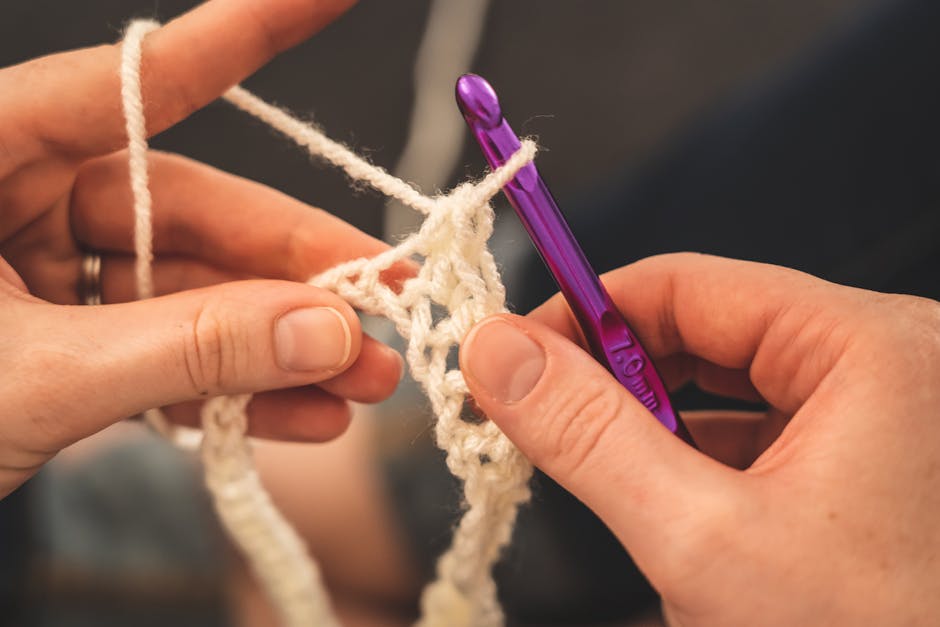
Here's a quick way to decide:
- If the item must hold a 3D shape (plushies, baskets), start with SC.
- If the item needs speed but still looks tidy (scarves, simple garments), use HDC.
- If the item should feel light or show intentional holes (lace panels, market bags), use DC.
- If the pattern needs "wow" texture without complex charts, add FPDC accents.
- If the item needs crisp lines or pro finishing, use slip stitch strategically.
Then layer one "signature" choice on top:
- Placement signature: BLO ridges, third-loop HDC, or surface slip stitch lines.
- Structure signature: FPDC frames, ribbing, or raised motifs.
- Yarn signature: fluffy yarn hides detail, smooth yarn shows it. (More on that below.)
This approach keeps your patterns approachable while still looking like your brand.
Worked Example: One Base Shape, Three Sellable Pattern Variations
Here's a concrete way we design unique patterns fast. Start with a simple base that already sells well, then change only stitch texture and finishing.

Base concept: a small zip pouch (or coin purse) made as two flat panels and seamed.
Version a: "Minimal Ridge Pouch" (Beginner-Friendly)
- Body: SC in BLO for the whole panel
- Top edge: one round of slip stitch to firm it up
- Optional: surface slip stitch line down the center as a design stripe
Why it sells: it looks intentional and modern, even though it's mostly SC.
Version B: "Knit-Look Pouch" (Same Skill Level, New Look)
- Body: HDC in the third loop
- Top edge: slip stitch edging
- Add-on: a simple DC color band across the middle (2 rows)
Why it sells: the knit-like texture reads as "different" in photos. It also makes great gift items because it looks store-bought.
Version C: "Framed Texture Pouch" (Intermediate Look, Simple Repeat)
- Body: DC for faster fabric
- Frame: FPDC around the edge of the panel (like a border)
- Finish: slip stitch seam or surface slip stitch detail to outline the frame
Why it sells: the raised frame creates a strong thumbnail image. Buyers notice it even at small size.
What changed across all three versions:
- Same size.
- Same construction.
- Same general audience.
- Only the stitch choices and finishing.
This is the core "pattern for sale" move. You're not reinventing the wheel every time. You're building a recognizable catalog.
If you design plushies, the same idea works even better. A basic body in SC can become "new" with BLO ridges, FPDC contour lines, and slip stitch facial detailing. For deeper plush design, we've got a full guide on crochet patterns for stuffed animals to sell.
The Unsexy Stuff That Makes Stitch Texture Sell (Yarn, Photos, and Instructions)
Stitches don't sell alone. The yarn and presentation decide whether the texture reads clearly.

Yarn Choices: Match Fiber to Stitch Detail
In our experience, stitch texture gets lost for two reasons: fuzzy yarn and busy color.
Try this pairing logic:
- Smooth cotton or smooth acrylic: best for showing BLO ridges, third-loop HDC, and FPDC lines.
- Light heather (gentle mixed color): good for SC and HDC texture without visual noise.
- Strong variegated (many colors): use with simple stitches, let color be the feature.
- Fluffy chenille or eyelash: avoid subtle texture stitches, focus on shape and big features.
If your goal is "unique texture," pick a yarn that doesn't fight you.
Photo Choices: Make Texture Visible on Purpose
A stitch pattern that looks amazing in real life can look flat in a photo.
Small adjustments help a lot:
- Side lighting (light coming from the side, not straight on) shows raised stitches.
- Photograph at a slight angle so ridges cast tiny shadows.
- Use a plain background so the texture is the main detail.
Pattern Writing: Don't Make Your Buyer Decode Your Genius
A sellable pattern is a clear pattern. Texture stitches can be simple, but you must write them in a repeatable way.
What we recommend:
- Put the "special stitch" in a short stitch key (example: "HDC in 3rd loop").
- Write repeats in one line, then state how many times to repeat.
- Call out where the texture should appear, like "You should see ridges forming."
If you're building more complex designs, that same clarity matters even more. This pairs well with how to crochet complex patterns for realistic stuffed animals.
Common Mistakes That Make Good Stitches Look Bad
Even strong crochet stitches won't save a pattern if these problems creep in.
- Mixing too many textures in one small item. Limit yourself to one main texture and one accent.
- Using FPDC everywhere. It's powerful, but it can make fabric stiff and bulky.
- Forgetting stretch direction. BLO ridges stretch differently than plain SC, so straps and cuffs can behave in surprising ways.
- Not swatching the "boring" parts. A border that ripples or a seam that puckers can ruin the finished look.
- Making the hardest part the first step. Lead with a simple start so buyers don't quit early.
A good rule: if the texture is the selling point, test it in the exact yarn weight you recommend.
Your Next Sellable Pattern Can Start with These Five Stitches
You can build a whole pattern shop from a small stitch toolkit. Single crochet gives you control, half double crochet gives you speed and softness, double crochet gives you bold shape fast, front post stitches give you instant texture, and slip stitch gives you clean finishing.
If you want patterns that look like "you," pick one signature texture move (BLO ridges, third-loop lines, post-stitch frames, or surface slip stitch drawing), then use it across a few related designs.
We sell crochet patterns and design them the way buyers actually use them, fast, clear, and with texture that shows up in photos. If you want more pattern ideas built for sales, explore our shop at https://artncraftartncraft.art.