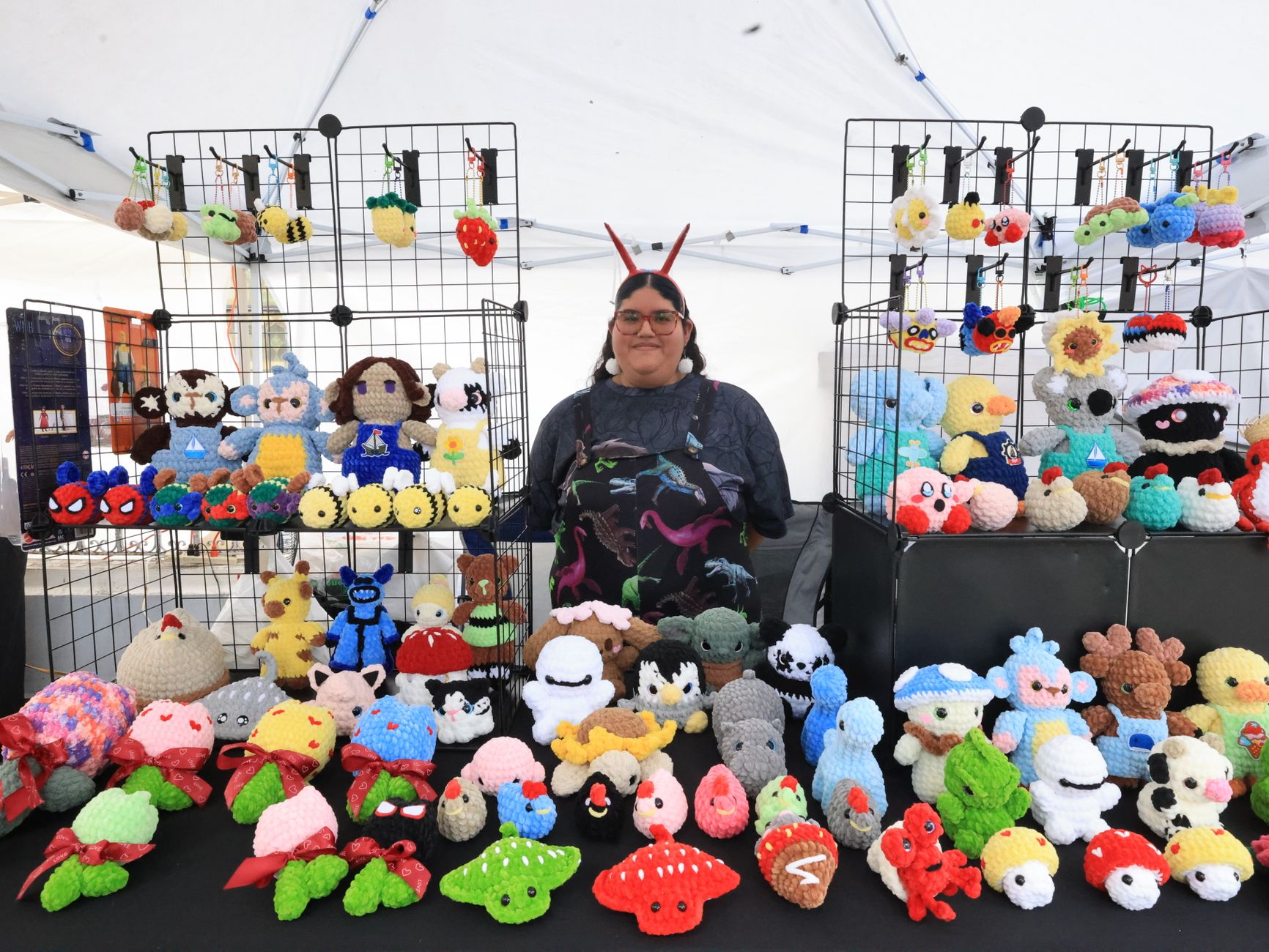
Crochet Patterns for Stuffed Animals to Sell: How to Design Unique Plushies People Actually Buy
Most crochet patterns don't fail because they're "not cute enough." They fail because the finished toy looks different for every crocheter, the shaping is fussy, or the instructions are hard to trust.
If you're creating crochet patterns for stuffed animals to sell, your real job is reliability. The pattern has to produce the same character again and again, across yarn types, tension styles, and skill levels, while still feeling special.
We design stuffed animal patterns all the time, and we can crochet just about anything. The fastest way to make a pattern sellable is to build it like a product: clear shape language, fewer failure points, and one memorable twist buyers can picture instantly.
Start with a "Buyable" Concept, Not a Cute Idea
A cute idea is "a bunny." A buyable concept is "a grumpy mushroom bunny with tiny boots and a removable hood." The buyer isn't only buying stitches. They're buying a character they can imagine finished.
Here's the filter we use before we even pick up a hook. If your concept passes these, it's much more likely to turn into a pattern that sells.
- Recognizable in a thumbnail: The silhouette should read at phone size. Big ears, a tall hat, chunky paws, or a round head help.
- One signature feature: One detail becomes the listing photo magnet (horn spiral, embroidered sleepy eyes, a heart-shaped tail tip).
- Low friction build: Limit tiny parts. Too many pieces to sew kills completion rates.
- Easy to customize: Buyers love "make it yours" options (stripe placement, spots, facial expressions, accessories).
A practical rule: keep the base animal simple, and spend your creativity budget on one standout accessory or texture panel. You get uniqueness without making the whole pattern fragile.
Transitioning from idea to pattern is mostly about shaping choices, and those choices decide how many support messages you'll get later.
Choose a Construction Style That Matches Your Buyer
Different crocheters want different experiences. Some love assembly. Others want one continuous piece. If you pick the wrong build style, reviews drop even if the toy is adorable.

Here's a decision framework we use when designing crochet patterns for stuffed animals to sell.
Pick Seam-Lite Designs for Most Buyers
If you want broad appeal, aim for minimal sewing.
- Best for: beginners, gift makers, fast markets.
- Design traits: head and body in one piece, legs crocheted on, simple ears.
- Trade-off: you must shape cleanly with increases and decreases, since you can't "hide" awkward joins in seams.
Pick Modular Designs for Fancy Shapes
If your animal has odd anatomy (antlers, wings, fins, long snouts), modular can be cleaner.
- Best for: intermediate crocheters, makers who like precision.
- Design traits: separate head, body, limbs, plus optional accessories.
- Trade-off: more sewing means more ways to place parts "wrong," so your pattern needs strong placement guidance.
Pick "Accessory Packs" for More Sales with Less Work
One of our favorite approaches is a simple base plush plus multiple add-ons.
- Base pattern: one animal body that works in different yarn sizes.
- Add-ons: hats, capes, backpacks, seasonal ears, face patches.
This is non-obvious but powerful: accessories give you new listings without redesigning the entire plush. Buyers also feel like they're getting a collection, not a single toy.
If you want help with shaping complex parts cleanly, our approach overlaps with what we teach in how to crochet unique stuffed toys with strong details.
A Worked Example: Designing a Unique Axolotl Pattern That Stays Consistent
Let's build a real pattern plan, the same way we do before writing final instructions. We'll design a "Sleepy Axolotl With Ruffle Gills and a Tiny Sleep Mask." The goal is a plush that looks consistent even if someone uses different yarn.
Step 1: Lock the Core Shape in Simple Geometry
- Head-body: one oval cylinder (like a capsule).
- Tail: flat-ish taper (made by decreasing into a wedge).
- Gills: three ruffles per side.
That's it. The sleep mask is the signature feature.
Step 2: Decide Your Target Size and Yarn Range
To keep it sellable, we write it to work in two common setups:
- Worsted weight yarn (medium, size 4) with a 3.0 to 3.5 mm hook.
- Plush/chenille yarn with a larger hook.
Instead of promising an exact inch size (tension varies), we design by proportions. The axolotl should look right even if it ends up 6 inches or 12 inches long.
Step 3: Build with Ratios, Not "Magic Numbers"
Here's the pattern logic that keeps proportions stable:
- Max stitch count is your anchor. Example: once the head reaches its widest round, you keep that stitch count for a few rounds.
- Length is measured in rounds at that max. Example: "Work 6 to 10 rounds even" depending on yarn bulk.
- Features attach at percentages. Example: gills attach around the widest area, centered about 40% back from the nose.
A practical way to write this in the pattern:
- "Place gills between Rounds 8 and 12 (around the widest section). Keep the top gill aligned with the eye line."
Now the maker has a visual anchor, not only a number.
Step 4: Remove the Biggest Failure Points
For stuffed animals, the top pattern fails are:
- Wobbly decreases leaving holes.
- Parts attached slightly off so the face looks "off."
- Stuffing lumps changing the shape.
So we bake fixes into the instructions:
- Tell them to use an invisible decrease (a decrease method that closes gaps).
- Give a pinning map (use stitch markers to mark center front, eye line, and gill zone).
- Tell them how to stuff (small pieces, push into corners, stop before it gets hard).
This is how a cute axolotl becomes a dependable pattern that earns good reviews.
Pattern Writing That Reduces Refunds and Bad Reviews
Design is only half the job. The other half is writing the pattern like you're standing next to the crocheter.

Include a "Materials Reality Check" up Front
Buyers hate surprises. Put these at the top:
- Yarn type examples (cotton, acrylic, plush) and what changes (size, stitch definition).
- Hook range, plus "use a smaller hook than the yarn label suggests" for tight fabric.
- Safety eyes size options, and a note about baby safety.
Safety eyes are not recommended for children under 3 because they can be a choking hazard. That's consistent with guidance from the U.S. Consumer Product Safety Commission on small parts hazards.
Write for the Moment They Get Stuck
A sellable pattern anticipates confusion points.
- Spell out stitch counts at the end of rounds.
- Label repeated sections clearly ("Tail Section," "Body Even Rounds," "Shaping Round").
- Use consistent terms (don't switch between "sc2tog" and "dec" without defining it).
If your audience includes newer crocheters, point them to foundations first. This pairs well with how to crochet for beginners and start selling patterns.
Add a Photo Plan, Even If You Don't Add Photos Yet
If you do include photos, great. If you don't, you still need a plan for what a tester must verify.
Minimum "must see" checkpoints for stuffed animals:
- After the head shaping (before stuffing).
- After the body length (so proportions are clear).
- Part placement pinned (ears, limbs, gills).
- Finished face close-up.
Those are the moments where makers decide if they trust your pattern.
Testing and Scaling: Make One Pattern Serve Many Customers
Testing is where "I can crochet anything" turns into "anyone can crochet this." You don't need a huge team, but you do need intentional coverage.
A Simple Testing Plan That Catches Real Issues
- One tester uses the same yarn and hook you used.
- One tester uses a different yarn category (cotton vs acrylic, or worsted vs plush).
- One tester makes it without reading ahead (this reveals unclear steps).
Ask testers for two things only: where they hesitated, and what looked different than your sample.
Grade Your Pattern for Yarn Changes
If you want the pattern to sell long-term, tell buyers what changes with yarn choice.
- Smooth yarn: better stitch definition, easier to count rounds.
- Plush yarn: bigger toy, harder to see stitches, often needs fewer tiny details.
A useful trick: write "optional detail tiers."
- Tier 1 (fast): simple embroidered smile, no toe details.
- Tier 2 (detailed): eyelids, toe bumps, color changes.
Now your listing appeals to both speed crocheters and detail lovers without needing two separate patterns.
FAQ
How Unique Does a Stuffed Animal Pattern Need to Be to Sell?
It needs one clear feature people remember. The base can be classic. The hook is a signature detail, a character vibe, or a modular accessory set.
Should I Design for Worsted Yarn or Plush Yarn?
Worsted yarn is easier for stitch counts and learning. Plush yarn is popular for gift-sized toys but hides mistakes and can frustrate beginners. If you can, write the pattern to work for both by using proportions and clear placement notes.
How Many Pieces Is Too Many for a Sellable Plush Pattern?
Past about 6 to 8 separate parts (not counting tiny accessories), completion rates drop for many buyers. If your design needs many parts, reduce sewing by crocheting limbs on, or combining head and body.
Make Your Next Pattern a "Repeatable Win"
The best crochet patterns for stuffed animals to sell aren't the most complicated. They're the ones that finish well in other people's hands.
Pick a concept with a strong silhouette, design with ratios so it scales, and write like you're preventing the next mistake before it happens.
If you want us to turn one of your plush ideas into a clean, test-ready pattern, check out our patterns at https://artncraftartncraft.art and see the style of instructions we build our designs around.