
Advanced Yarn Techniques for Crochet: Make Unique Patterns You Can Sell
Most "original" crochet patterns fail for one boring reason: the yarn behaves differently than the designer expected.
If you're trying to sell patterns, advanced yarn techniques for crochet aren't about fancy stitches. They're about controlling drape (how fabric hangs), stretch, and texture so your design works in more than one yarn, more than one tension, and more than one pair of hands.
Below is a practical, yarn-first playbook we use when designing crochet patterns to sell, including a worked example you can copy for your own listings.
Use Yarn Behavior as Your Design Engine (Not an Afterthought)
A pattern that sells and gets good reviews usually does three things at once: it looks special, it's repeatable, and it's forgiving.
The quickest way to get there is to pick the yarn behavior you want first, then choose stitches that support it.
Here are the "big levers" that change the final fabric more than most people realize:
- Twist and ply (how the strands are spun): High twist holds crisp stitch definition. Low twist can look fuzzy and "melt" details.
- Fiber bounce and memory: Wool tends to spring back (great for ribbing and shaping). Cotton tends to stay where you put it (great for structure).
- Halo and fuzz: Mohair-style halos blur texture. That can be gorgeous, but it hides shaping and colorwork edges.
- Density and weight: Two "worsted" yarns can behave wildly differently. One can feel ropey and stiff, another can drape.
Our rule when we're designing something to sell is simple: if the design depends on one exact yarn to look right, the pattern needs extra guidance, and the listing needs to say that clearly.
A good pattern doesn't just name a yarn. It tells the buyer what to look for if they substitute.
Advanced Yarn Techniques for Crochet That Create "Signature" Texture
If you want your patterns to feel unique (and not like a basic stitch swap), focus on yarn handling techniques that change the fabric, not just the chart.
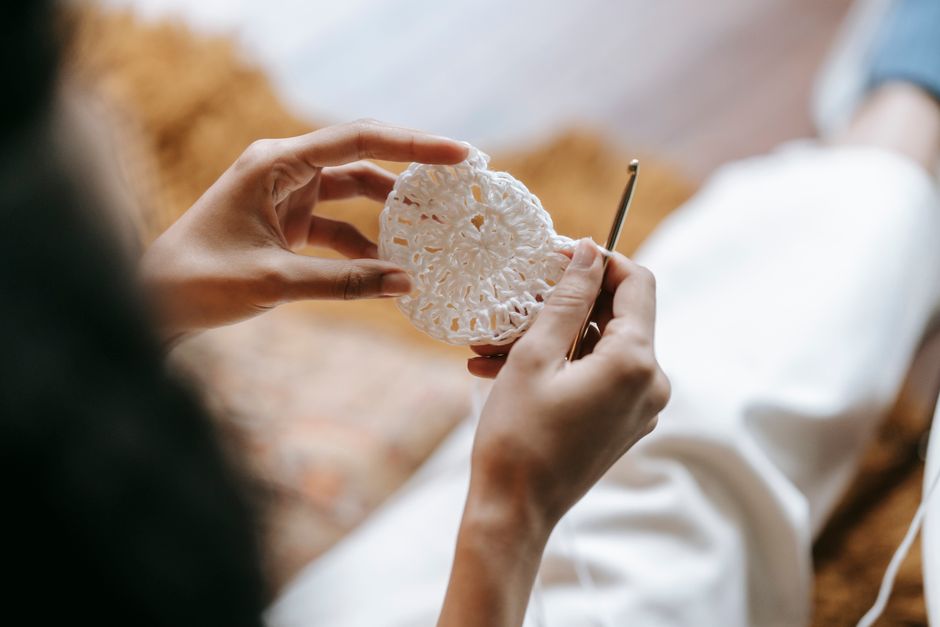
Here are advanced yarn techniques for crochet we rely on the most, with the trade-offs that matter when you're selling patterns.
Hold Two Strands Together (Strategic Pairing)
Holding two strands together is the fastest way to create a texture buyers can't get from a single skein.
Try pairings like:
- Smooth base + halo strand (for soft blur)
- Two smooth strands in close colors (for depth without "striping")
- One sturdy strand + one novelty strand (for controlled chaos)
Trade-off: your stitch counts stay the same, but your gauge and drape change a lot. In a sellable pattern, you need to call out whether the goal is "soft and squishy" or "firm and structured."
Planned Pooling (When Color Does the Work)
Planned pooling is when a variegated yarn lines up into a repeating pattern, often argyle.
This can make a simple stitch look like magic, but it's picky. Different dye lots, hook changes, and tension shifts can break the effect.
If you publish a pooling pattern, make it buyer-proof:
- Specify a stitch pattern that's stable (many use moss stitch for a reason).
- Include a troubleshooting note for what to do if the colors drift (change hook size, add or remove a stitch section, or adjust tension).
Yarn "Doubling" Inside One Row (Texture Control Without Bulk)
You can create raised ridges and padding by adding yarn in targeted spots only, instead of holding double the whole time.
Examples that translate well to patterns for sale:
- Stuffed animal limbs that need firmness, while the body stays softer
- Bag bottoms that need structure, while the sides drape
- Hat brims that need stability without making the crown too stiff
Trade-off: this adds complexity to the write-up. You'll want ultra-clear instructions and a small diagram or written "map" of where the extra yarn goes.
Intentional Yarn Under vs Yarn Over (Amigurumi Detail Sharpening)
In tight single crochet, switching between yarn over and yarn under changes how the stitches stack and how clean the fabric looks.
This is especially noticeable in plushies and small detailed shapes.
If your pattern depends on that look, say it plainly in the materials section and in round 1, not buried in a note halfway through.
For more plush-focused selling ideas, our stuffed animal patterns are collected here: Buy Unique Crochet Patterns for Stuffed Animals: discover designs you can create and sell.
A Worked Example: Designing One Pattern in Two Yarn Paths (and Selling Both)
Here's a concrete way to turn one idea into two products without duplicating all your work.

Let's say you want to design a "cloud pouch" (small zipperless pouch, drawstring top). The shape is simple, but the texture is the selling point.
Step 1: Pick Two Distinct Fabric Goals
You're not choosing two colors. You're choosing two behaviors.
- Version A: Plush and soft (giftable, sensory, cozy)
- Version B: Crisp and defined (clean stitches, modern look, better stitch photography)
Step 2: Choose Yarn Recipes (Not Just Yarn Brands)
Write your pattern around properties buyers can match.
- Version A yarn recipe: 1 smooth strand + 1 halo strand held together
- Version B yarn recipe: a smooth, higher-twist yarn alone
Step 3: Build Gauge and Sizing Notes That Don't Collapse
This is the part pattern sellers skip, then they get messages like "mine came out tiny."
Instead of promising one exact gauge, give buyers a decision:
- If your fabric feels stiff and stands up on its own, go up a hook size.
- If your stitches look loose and you can see gaps, go down a hook size.
Then add one measurable checkpoint early, like:
- "After Round 10, the base circle should be about the size of your palm."
That kind of check is more useful than a perfect gauge number, especially for beginners buying your pattern.
Step 4: Sell It Without Confusing People
You can sell these as:
- One pattern with two yarn options (same shape, different finish)
- Two separate patterns if the techniques and photos are very different
Choose one pattern if the construction is identical.
Choose two listings if buyers will search for them differently (for example, "fluffy cloud pouch" vs "textured stitch pouch") and the skill expectations are different.
If you want to go further and offer buyers custom options, we also write about custom crochet patterns for advanced projects and what to include.
A Quick Decision Framework: Pick Techniques Based on What You're Selling
A lot of technique advice online ignores the business part. Here's the filter we use.

Choose Texture-Heavy Yarn Techniques If Your Photos Need to Stop the Scroll
Good picks:
- Two strands held together
- Halo overlays
- Strong ridge textures (paired with smooth yarn)
Caveat: heavy texture can hide shaping mistakes, but it also hides your shaping skill. If your unique value is clever construction, don't cover it up.
Choose Structure-First Yarn Choices If You Sell Functional Items
Good picks:
- Cotton or cotton blends for bags and home items
- Firm gauge with smaller hook for clean edges
- Targeted doubling in stress areas (bag base, strap joins)
Caveat: stiff fabric can fatigue hands. If your item takes hours, consider buyer comfort and add stretch breaks in your maker notes.
Choose Color-Control Techniques If Your Pattern Is "Simple but Special"
Good picks:
- Planned pooling
- Self-striping with repeat-friendly stitch counts
- Subtle marling (two close colors held together)
Caveat: color techniques are yarn-dependent. Your pattern needs a plan for substitutions so buyers don't feel tricked.
Common Mistakes That Cause Bad Reviews (and How to Prevent Them)
Most pattern complaints are not about the maker's skill. They're about unclear expectations.
These are the big ones we see, plus the fix you can add to your next PDF.
- The yarn substitution trap: Buyers swap yarn and the item changes size.
- Pretty photos, no texture guidance: The buyer can't recreate the look.
- Gauge is treated like homework: People skip it.
- The pattern uses specialty yarn with no backup plan: Supply changes, listings go out of stock.
If you're collecting sources for stitch charts, yarn comparisons, and more complex builds, keep a bookmark for crochet pattern resources for complex designs that actually increase sales.
Closing: Make Your Yarn Choices Part of Your Brand
The fastest way to stand out as a pattern seller is to become "the person who does that texture."
Pick one or two yarn-forward techniques you love, then build a small pattern line around them so buyers recognize your style.
If you want to explore more designs that sell well in the plush space, start with our curated pattern pages on https://artncraftartncraft.art, and keep your next release focused on one clear fabric goal: plush, crisp, structured, or drapey. Buyers can feel clarity, even through a screen.