
Crochet Pattern Resources for Complex Designs That Actually Increase Sales
The sale that stings the most is the one that almost happened.
Someone buys your complex pattern, gets stuck on Round 7 (the one with the shaping and color change), and messages you at 11:30 PM. You reply, you troubleshoot, you rewrite a line, and you realize the real problem is bigger than a typo. The pattern needed better support.
If you sell advanced work, the crochet pattern resources you use matter as much as your design skills. The right resources help you write cleaner instructions, show the hard parts clearly, test faster, and reduce refund-level confusion. That turns "beautiful but intimidating" into "I can do this," and that's what increases sales.
The Problem with "Normal" Patterns (and What Complex Buyers Need Instead)
Simple patterns sell because they feel safe. Complex patterns sell because they feel special.
But special comes with risk. Advanced crocheters will forgive a challenge. They won't forgive missing information.
Here's what we see people need most when they buy a complex design:
- A clear difficulty promise (what makes it hard, and what skills they should already have)
- Visual confirmation at the exact moment things get weird (joins, shaping, stitch counts, color swaps)
- A way to recover when they mess up (because they will)
- Yarn guidance that respects reality (substitutes, gauge drift, fiber behavior)
If your current crochet pattern resources are mostly "a PDF and good luck," you end up doing support forever. The goal is to build resources into the pattern so buyers feel confident without needing you on call.
Transition point: once you know what complex buyers need, you can choose the right resource types instead of adding random extras.
A Decision Framework: Which Crochet Pattern Resources Make Sales Go Up
Not every add-on helps sales. Some just add work.

We use a simple rule: add resources that reduce buyer hesitation or reduce buyer failure.
Choose based on how your pattern is complex.
Choose Charts When the Complexity Is Visual
Charts (symbol diagrams) are best when the shape is easier to see than to describe.
Pick charts for:
- Lace motifs and doilies
- Overlay crochet and textured repeats
- Complicated stitch patterns that are hard to count in text
Text-only instructions for lace often create "I followed it but it looks wrong." A chart gives instant confirmation.
If your audience is mixed, include both. You can label it clearly: "Chart for visual makers, written rows for text makers."
Choose Photo Callouts When the Complexity Is Physical
Photos win when a stitch is technically simple, but physically confusing.
Use photo callouts for:
- Joining limbs or parts (amigurumi, stuffed animals)
- Invisible decreases, color changes, and yarn-under vs yarn-over differences
- Front loop only (FLO) and back loop only (BLO) shaping that flips the fabric
A single photo with an arrow can save ten paragraphs and fifteen messages.
Choose a "Rescue Section" When the Complexity Is Error-Prone
Some designs have one spot where everyone slips.
Add a rescue section (one page, max) that includes:
- The stitch count after each round or row in the danger zone
- A short checklist of the top 3 mistakes
- A fast way to confirm they're still on track (a photo of what it should look like right now)
This is one of the most sales-friendly resources because it lowers fear. People buy the pattern because they trust they won't get stranded.
Choose Yarn Notes When the Complexity Is Material-Sensitive
Complex shaping and texture change a lot based on fiber.
Include yarn notes when:
- The design relies on crisp stitch definition (cables, overlay, dense texture)
- The item must hold a shape (bags, baskets, structured toys)
- Colorwork needs clean contrasts
Keep it practical. Talk about what you've seen happen with cotton vs acrylic, smooth vs fuzzy, plied vs single-ply. You don't need a lab report, just real maker guidance.
If you want to go deeper on building complexity that stays readable, link this with your skill-building content. Our guide on best crochet techniques for intricate designs pairs perfectly with a resource-heavy pattern format.
A Worked Example: Turning a "Hard" Pattern Into a Confident Buy
Let's take a realistic complex design: an advanced stuffed animal with tight shaping, color changes, and a detailed face.

The pattern itself might be solid. The sales problem is that buyers can't tell if they'll succeed.
Here's how we'd package crochet pattern resources to increase conversions and reduce support, without bloating the pattern.
Step 1: Rewrite the Pattern Promise (so the Right People Buy)
Add a short "Before You Start" box:
- Skill level: advanced beginner, intermediate, or advanced (pick one)
- You should already know: magic ring, invisible decrease, basic color change
- You will learn in this pattern: a specific technique (example: sculpted muzzle shaping)
This does two things. It builds trust, and it prevents mis-buys that turn into refunds.
Step 2: Add Checkpoints Where People Normally Panic
Add stitch counts every round during shaping.
Then add two photo checkpoints:
- After the head shaping round where the stitch count changes quickly
- After the first eye placement, before anything is sewn shut
Those two moments are where people most often realize they're off.
Step 3: Include a One-Page Assembly Map
For stuffed animals, assembly is the sales killer. People fear sewing.
We add:
- A simple diagram showing where each part attaches
- Pin placement notes (how many pins, what to line up)
- A "symmetry rule" (attach ears first, then arms, then legs, so the body stays balanced)
This is not fluff. It's the difference between "I'll buy it later" and "I can do this tonight."
If stuffed animals are your main product line, you'll also like unique crochet patterns for stuffed animals that sell because it covers the design-test-price loop that keeps your patterns profitable.
Step 4: Add a Tiny Troubleshooting Table
Keep it short and specific:
- "Head is pointy" -> you may have missed the increase round, check Round X stitch count
- "Color change looks jagged" -> switch to change-on-last-yarn-over method, photo included
- "Parts look different sizes" -> confirm hook size and yarn weight, note your tension
This table is a support magnet in a good way. It handles the most common messages before they happen.
Where to Find (and How to Build) Unique Resources Without Overworking Yourself
You don't need a film studio or a 60-page PDF. You need the right assets, reused smartly.
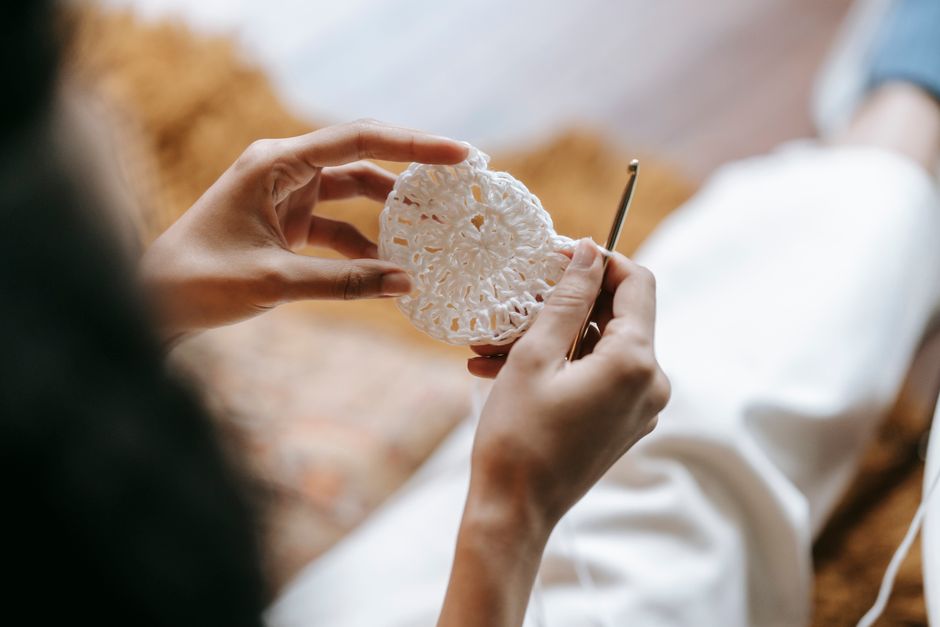
Here are crochet pattern resources we lean on, and how to keep them sustainable.
Build a Reusable "Resource Bank" for Your Brand
Create a folder of assets you can drop into any complex pattern:
- A standard stitch glossary (with your preferred methods)
- A photo set for your most-used techniques (invisible decrease, neat color change, joining)
- A one-page "how to read my patterns" guide
- A sizing and gauge note template
Once you've built this once, every future pattern gets easier.
Keep Video Optional, Short, and Specific
Long videos become a second product to maintain.
If you do video, keep it "micro-help," like:
- 30 to 90 seconds
- One technique only
- Filmed close to the hands
- Named by the exact problem ("Round 12 Join, Left Arm") so buyers can find it
You can host these as unlisted links and include them inside the PDF. Buyers love it, and you avoid endless editing.
Use Testing as a Resource Generator, Not Just Quality Control
Pattern testing isn't only for catching errors.
Ask testers for two things:
- The one line they reread three times
- The step they wanted a photo of
Those answers tell you exactly where your resources should go. It's the fastest way to improve sales, because you're removing the friction that blocks finishes.
Don't Let "More Pages" Replace Clear Writing
A complex pattern can still be clean.
If you find yourself adding resource after resource, pause and check the base instructions:
- Are you consistent with terminology?
- Do you keep repeats readable?
- Do you separate design notes from step-by-step actions?
Great resources support clear patterns. They don't cover up messy ones.
The Sales Angle People Miss: Confidence Is a Product Feature
Complex designs sell because they look impressive. Your job is to sell the feeling that the buyer can actually make it.
That's why crochet pattern resources aren't "extras." They're part of what the customer buys.
If you want to increase sales on complex patterns, pick two upgrades for your next release:
- Add stitch-count checkpoints in the hardest section.
- Add two photo checkpoints at the exact moments people usually doubt themselves.
Then watch what happens to your messages, your reviews, and your repeat buyers.
If you want patterns that already come with that level of support baked in, that's what we build and sell at artncraftartncraft.art. We design for the hard stuff, and we make it feel doable.