
Easy Crochet Patterns for Beginners: Master Simple Designs You Can Sell
Your first "sellable" crochet idea usually dies in one of two places, the edges look wobbly, or it takes so long you'd have to charge a price nobody will pay.
That's why the best easy crochet patterns for beginners to sell aren't the cutest or the trendiest. They're the ones built from simple stitches, clean shaping, and repeatable steps you can make the same way every time. Once that part is solid, you can add personality and charge for it.
The Beginner Patterns That Sell (and Why)
A pattern sells well when it hits three goals at the same time, it looks "finished," it's fast to make, and it leaves room for options (colors, sizes, faces, themes).
As crocheters, we sometimes pick projects based on what's fun to make. As sellers, you also need to pick projects based on what's easy to repeat and easy for buyers to understand.
Here are beginner-friendly product types that usually work well because they're simple builds with a big "wow" factor:
- Chunky headbands and ear warmers (simple rectangles or top-down bands, great for gift season)
- Beanies with one texture stitch (same shape, different yarns, easy to size)
- Coasters and mug rugs (flat circles or squares, fast, good for sets)
- Mini pouches and zipper-less coin purses (basic shaping, useful item)
- Simple amigurumi (stuffed toys) with few parts (one body, two ears, tiny details)
A key trade-off: flat items (coasters, scarves) are easiest to make, but they're also easiest for shoppers to compare across sellers. Small shaped items (pouches, plushies) take a bit more skill, but they stand out faster in photos.
If you want to go the stuffed-toy route without getting overwhelmed, start with designs that use one main piece and minimal sewing. We show a beginner-friendly way to think about toy structure in how to crochet unique stuffed toys that people want to buy.
A Simple Decision Framework: Choose Your First "for Sale" Pattern
Beginners often ask what they should make first. The answer depends on what you're trying to optimize.

Use this quick framework to pick a project you can actually finish, repeat, and sell.
Choose Fast Repeatability If You Want Quick Listings
Pick projects that are mostly one stitch pattern and one shape.
Good fits:
- Coaster sets
- Chunky headbands
- Simple dishcloths
What you give up: these are common items. You'll need stronger branding (colors, sets, themes) to look different.
Choose "Giftable Cute" If You Want Higher Per-Item Prices
Pick small items with personality, but keep construction simple.
Good fits:
- Mini plush keychains
- Tiny animals with one-piece bodies
- Pouches with a simple flap
What you give up: you'll spend more time on details and finishing. Your speed improves with practice.
Choose Skill-Building If You Want to Level up While Selling
Pick patterns that teach one new thing at a time.
Good fits:
- Hat that teaches increases and working in the round
- Simple bag that teaches straps and sturdier stitches
- Toy that teaches shaping plus basic assembly
What you give up: your first few items take longer. The payoff is you grow into more unique designs.
One rule we live by: only add one "new" technique per product at the start. If you're learning magic ring (starting amigurumi in a tight circle), don't also make it your first time doing color changes and fiddly embroidery.
Worked Example: Turning a Basic Beginner Pattern Into a Unique Seller
Here's a concrete way to take a very basic idea and make it look like your own, without turning it into a hard project.
Example Product: a Simple Crochet Pouch
Base pattern (beginner level): a small pouch made from a rectangle, folded, and stitched up the sides. Add a simple flap.
Now we "upgrade" it in ways buyers notice, but beginners can still do.
- Pick one texture that photographs well
Use half double crochet (a mid-height stitch) in the back loop only (you crochet into the back strand of the stitch). That creates clean ridges with almost no extra effort.
- Add one signature detail, not five
Choose one of these:
- A single contrasting stripe near the top
- A simple scallop edge on the flap
- A tiny stitched-on tag (even a crocheted "label" circle works)
- Make it a "set" with a purpose
Sell it as:
- Earbud pouch
- Gift card holder
- Lip balm pouch
Same pouch, different listing, different photo styling.
- Use yarn choice to control the vibe
- Cotton yarn looks crisp and "clean," great for everyday items.
- Acrylic yarn is soft, budget-friendly, and comes in tons of colors.
- Chunky yarn makes it look plush and modern, but it adds bulk fast.
- Price and time reality check (the non-obvious part)
Even if you never share exact numbers, you should know your own "minutes per item."
Time yourself making one pouch from start to finish, including weaving ends and sewing. If it takes longer than you expected, simplify the finish before you simplify the design. A clean seam and neat edges sell the item more than extra decoration.
That's the pattern-selling secret most beginners miss: finishing is the product.
Common Mistakes That Make Beginner Items Look "Homemade" (and How to Fix Them)
Some crochet pieces look charmingly handmade. Others look messy. The difference is usually a few controllable things.
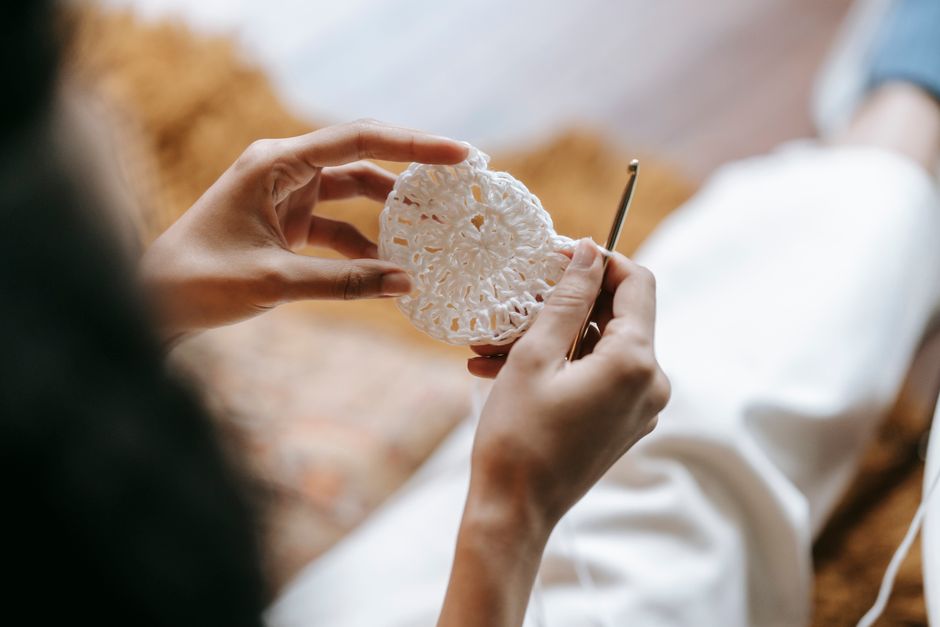
Wobbly Edges and Uneven Sides
This is almost always a counting issue, not a talent issue.
Fixes that work fast:
- Use a stitch marker in the first and last stitch of each row.
- Count stitches every few rows, not just at the end.
- If you're working in the round, mark your first stitch of each round.
Lumpy Stuffed Toys
Stuffing is an art. Too little looks deflated. Too much makes gaps.
Better approach:
- Add stuffing in small pieces, and push it into place.
- Stuff more firmly in the "bottom" so it sits well.
- Use a smaller hook than the yarn label suggests for toys, it helps close gaps.
If you want to eventually sell more detailed plush designs, keep your early practice toys simple, then step up to more complex shaping later. We cover that progression in how to crochet complex stuffed animals that look store-bought.
Colors That Look Random
Beginner sellers often pick colors they like, then wonder why items don't look "designed."
Use this simple rule: pick one main color, one accent, and one neutral.
Examples:
- Sage (main) + cream (neutral) + gold (accent)
- Navy (main) + white (neutral) + red (accent)
- Blush (main) + beige (neutral) + chocolate (accent)
Photos That Hide the Work
Even a perfect item won't sell if the photo is dark or busy.
Start with:
- Bright window light
- Plain background
- One close-up that shows stitch texture
Your stitches are the proof. Show them.
Making Patterns vs Selling Finished Items: What Beginners Should Do First
A lot of beginners want to sell patterns right away, because it feels scalable. That's a great goal, but it's not always the best first step.
Here's the honest path we recommend.
Start with Finished Items If You're Still Building Consistency
Finished items teach you:
- How yarn behaves after use
- Which seams hold up
- What buyers actually ask for (sizes, colors, changes)
You also learn how long things really take you.
Move Into Pattern Sales Once You Can Recreate Your Item Perfectly
A sellable pattern needs clear steps, clean sizing, and photos that show key moments.
Before you publish a pattern, make it twice, without changing anything, and confirm both results match.
If you're building your pattern library and want fresh ideas to study, our shop focuses on unique designs you can make your own. A good jumping-off point is buy crochet patterns for unique designs and fresh ideas.
FAQ
Do I Need to Be "Advanced" to Sell Crochet Items?
No. You need consistency more than complexity. Clean edges, solid seams, and neat finishing beat fancy stitches.

What's the Fastest Beginner Item to Sell?
Small sets tend to move well because they feel like a complete gift. Coasters, scrubbies, and headbands are good starters.
How Do I Make Sure My Items Look Unique If I'm Using Easy Patterns?
Pick one signature detail you repeat across products, like a color style, a cute face style, a border, or a tag shape. Consistency reads as "brand."
Should I Sell the Same Design in Many Colors?
Yes, but keep the palette controlled. Offer a few colorways you can repeat easily, then add seasonal options later.
Your Best Next Step
Pick one beginner-friendly product type, make it three times, and track what improved each round. Keep the pattern simple, then make the finishing sharp.
That's how easy crochet patterns for beginners turn into unique designs people pay for, without burning you out or turning crochet into a chore.