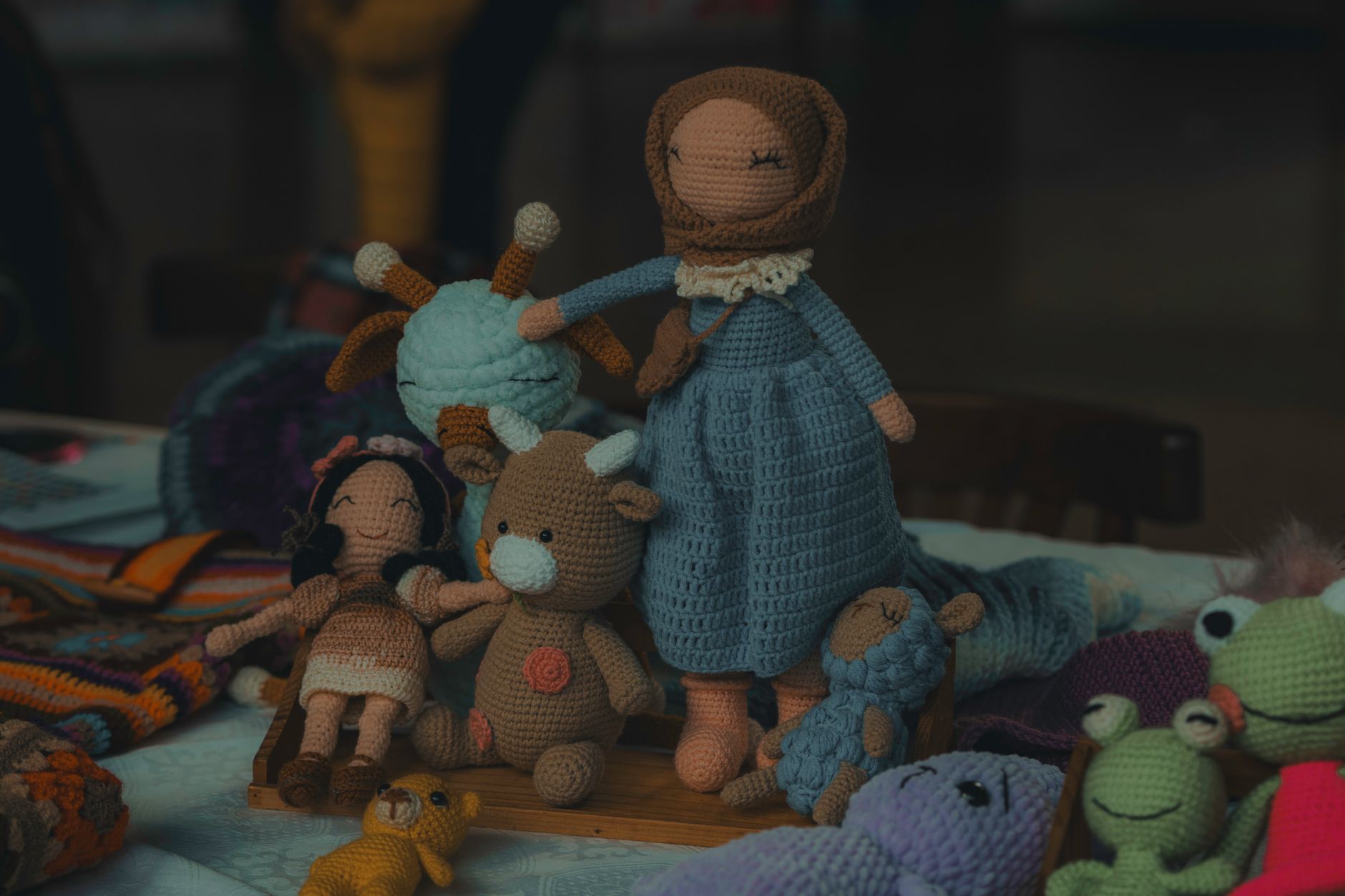
Buy Crochet Patterns for Complex Designs: How to Pick Unique Patterns You Can Actually Sell
You're halfway through a "super advanced" pattern you bought online. The photos looked amazing. Then the shaping doesn't match the picture, the stitch counts don't line up, and the designer never answers messages.
If you want to buy crochet patterns for complex designs so you can make items to sell, you need more than pretty listing photos. You need patterns that are clear, tested, and written in a way that won't waste your time or yarn. Below is the exact step-by-step checklist we use when we shop for complex patterns, plus a worked example so you can see how the decision plays out in real life.
Step 1: Get Clear on What "Complex" Means for Your Shop
"Complex" isn't one thing. A pattern can be complex because the stitches are advanced, because the shaping is fussy, because it has colorwork, or because the finishing takes forever.
Before you buy anything, write down what kind of complexity you can reliably produce on a schedule. That's the difference between selling a few showpieces and building steady listings.
Here are four common kinds of complexity, and what they change for selling:
- Technique-heavy complexity (overlay crochet, mosaic crochet, cables, lace): higher skill, but often repeatable once you learn the rhythm.
- Shaping complexity (garments, fitted hats, structured bags): more try-ons and measuring, more chances to restart.
- Construction complexity (many small parts, sewn joins, lots of assembly): big time cost, consistency can be hard across repeats.
- Finishing complexity (lining, zippers, stiffeners, wire, embroidery): can look premium, but adds supplies and "last-mile" frustration.
A quick rule we use: if you can't explain the complexity in one sentence, you'll have trouble pricing the finished item.
Step 2: Screen the Listing Like a Pro (Before You Spend Money)
A good complex pattern reads like a map. A weak one reads like a vibe.

Before purchasing, scan the description and photos for proof that the designer knows how to communicate. You're not only buying instructions, you're buying fewer mistakes.
What a Strong Complex Pattern Listing Usually Includes
Look for these signals (you don't need all of them, but the more the better):
- Multiple photos from different angles, not just one hero shot
- Close-ups that show stitch texture, color changes, and edging
- Skill level details that name techniques (not only "advanced")
- Materials list with yarn weight, fiber suggestions, and yardage ranges
- Gauge info (even for amigurumi, tension guidance matters)
- Finished measurements for at least one size or version
- Notes about special tools (tapestry needle, stitch markers, blocking mats)
If the listing only says "advanced pattern" with no specifics, treat it like a red flag.
The Non-Obvious Check: Is the Pattern Written for Repeatability?
Selling means making the item more than once.
A pattern written for repeatability often mentions things like "assembly order," "checkpoints," or "place markers at these points." Those tiny notes save hours. In our experience, the best designers also include "you should have X stitches at the end of this round" almost everywhere it matters.
If you love complex builds, you'll also appreciate designers who tell you where you can safely substitute stitches or yarn types without breaking the shape.
Step 3: Confirm You Can Sell Finished Items (and Know What You Can't Do)
Many crocheters get burned here. Buying a pattern does not automatically mean you can:
- Resell the pattern
- Share the PDF with a friend
- Post full pattern instructions publicly
But you can often sell the finished items you make from it, depending on the designer's terms. Those terms are usually called "usage rights" or "copyright terms."
Here's the decision framework we recommend:
- If the designer clearly allows selling finished items, you're good, follow their credit request if they have one.
- If the designer clearly forbids selling finished items, skip it for business use. Choose a different design.
- If it's unclear or missing, message the designer before you buy. If they won't answer, don't risk it.
Also keep your product listings clean. Even if you can sell the finished item, don't copy their photos or paste their pattern text into your listing.
If you're building a collection of higher-detail designs, our related guide can help you compare options without getting overwhelmed: how to buy detailed crochet patterns for sale.
Step 4: Match Pattern Difficulty to Your Profit (a Worked Example)
Complex patterns can sell well, but only if the time cost and failure risk match your price point.

Here's a worked example using a realistic choice many sellers face: choosing between a complex wearable and a complex plush.
Scenario: You Want One "Signature" Item for Your Shop
You're deciding between:
- Pattern A: a fitted crochet cardigan (sizes, shaping, seaming, edging)
- Pattern B: a large articulated stuffed creature (many parts, color changes, detailed face)
You can make both, but you need the one that's more dependable to produce and sell.
Step-By-Step Evaluation
- Time you can actually repeat
A cardigan has long rows and lots of yarn, plus blocking (wetting/steaming to shape the fabric). A plush has many pieces, but you can batch parts (make all arms, then all legs).
If you only have small blocks of time, batching often wins.
- Sizing risk
Wearables carry fit risk. Even with gauge, people's bodies vary. Returns and "can you adjust this" messages take time.
Plush items are usually one size. That's predictable.
- Material cost sensitivity
A cardigan can get expensive fast. If the pattern demands a specific fiber blend, your cost swings with availability.
Plush can be made with a few reliable yarn lines you keep stocked.
- Customer expectation risk
Customers compare clothing to store-bought garments. They notice sleeve length, drape, and stretch.
For plush, customers focus on cuteness, symmetry, and clean finishing.
- Photo selling power
A cardigan needs styling, good lighting, and fit photos. A plush can sell from clear close-ups and a scale photo.
The Decision
- Choose Pattern A (cardigan) if you want higher price potential and you're comfortable with measuring, trying on, and adjusting.
- Choose Pattern B (plush) if you want predictable production and fewer fit conversations, while still offering a "wow" design.
If you do pick wearables, keep your technique toolkit sharp. It's the difference between a frustrating build and a clean, professional finish. We break down the exact skills that matter most here: advanced crochet techniques for complex patterns.
Step 5: Do a Mini "Test Run" Before You Commit to Selling
Complex patterns can be technically correct and still be a bad match for your hands.
Before you list the finished item for sale, do a short test run. This keeps you from pricing something based on hope.
Here's a simple test process we use:
- Read the whole pattern once with a pen or notes app. Mark any step that feels vague.
- Swatch the hardest part first, not the easy part. If the pattern's hardest section is cables, swatch the cables.
- Check for count checkpoints. If there are none, add your own stitch markers every repeat.
- Time a small section (like one motif, one sleeve repeat, or one limb). Multiply to estimate total time.
- Decide your "nope" threshold. For example: "If I have to frog (rip out) more than twice in the first hour, I won't sell this design."
This is the part most sellers skip, then they get stuck finishing a piece they can't reproduce.
Step 6: Spot "Unique" Designs Without Buying Something Un-Sellable
Unique doesn't have to mean weird. It means recognizable.

A design sells as "unique" when a shopper can spot it in a scroll. The trick is picking uniqueness that doesn't add chaos to production.
Here are uniqueness levers that usually sell well without wrecking your workflow:
- Silhouette changes (dramatic collar, oversized sleeves, sculpted hood)
- Texture panels (one standout stitch pattern in a clean base fabric)
- Unexpected color placement (bold yoke, gradient section, contrast edging)
- Signature details (a specific ear shape on plush, a repeat motif, a border style)
Be careful with uniqueness that depends on perfect tension across many tiny parts. That can turn into slow, stressful builds.
If you want maximum "unique" with controlled complexity, look for patterns with modular structure. Think motifs, panels, or repeatable segments.
Step 7: What to Ask the Designer Before You Buy (Copy-Paste Friendly)
Sometimes the listing looks great, but one missing detail can ruin the project.
Here are messages you can paste and send:
- "Does this pattern include stitch counts at the end of most rounds/rows?"
- "Are there photo steps for assembly and shaping?"
- "Can I sell finished items made from this pattern? If yes, do you prefer designer credit in listings?"
- "Does the pattern use US terms or UK terms?"
- "Is there guidance for yarn substitution if I can't get the exact yarn?"
A responsive designer is part of what you're buying.
Final Buying Checklist (Save This)
If you want to buy crochet patterns for complex designs and turn them into products you can sell, use this quick checklist right before checkout:
- The listing shows multiple angles and close-ups
- Techniques are named, not just "advanced"
- Materials and gauge guidance are included
- Pattern includes stitch counts and checkpoints
- Selling finished items is clearly allowed (or confirmed in writing)
- You can picture making it twice without hating your life
We design and sell patterns because we love the hard stuff, the shaping, the texture, the tricky construction, all of it. If you choose patterns using the steps above, you'll end up with designs that feel premium and actually fit your business.
If you want help choosing the right yarn for a complex look (without getting surprised by stretch, fuzz, or splitting), start here: how to choose crochet yarn types for stunning gift patterns.