
How to Crochet Unique Patterns for Sale: Tips for Complex Designs That Actually Work
Your "original" design might be original, but if it takes three tries to understand Round 6, it won't sell.
That's the hard truth about complex crochet. The stitches can be advanced, the shape can be wild, and the idea can be brilliant. But buyers pay for a pattern that works the first time, on their couch, with their yarn.
So if you're searching for How to Crochet Unique Patterns for Sale, the goal isn't just to invent something new. It's to create a design that feels fresh and still reads like a clear set of directions.
We crochet everything, from tiny details to complicated shapes, and the "unique" patterns that sell best always have one thing in common: they're engineered, not improvised.
How to Crochet Unique Patterns for Sale Without Guesswork
If your design process is "I'll just start crocheting and see what happens," you'll hit a wall fast with complex projects.
Freeform is fun, but selling patterns needs a plan. A buyer can't see what's in your head. They only have your words, your stitch counts, and your photos.
Here's a design workflow we use when we want a pattern to feel unique and still be repeatable.
Start with a "Design Brief," Not a Swatch
Before you pick up a hook, write 6 lines. This saves hours later.
Include:
- What the finished item is (example: dragon plush, lace shawl, sculpted bag)
- What makes it different (example: layered spikes, hidden pocket, 3D wings)
- Skill level (be honest, "advanced beginner" is not "complex shaping")
- Construction style (one piece, joined motifs, sewn parts)
- Target yarn weight and hook range
- Must-have features (example: stands on its own, reversible texture)
That brief becomes your guardrails. It keeps the project "unique" on purpose, instead of unique by accident.
Build Complexity in Layers
Complex designs are easier to sell when the difficulty comes in steps.
Think of it like levels:
- A simple base shape that anyone could make
- One "signature" feature that makes it yours
- Optional upgrades that advanced crocheters love
For example, a stuffed animal can be a basic body with standard increases and decreases. The uniqueness can be in the face shaping, the limb pose, or the surface texture.
If you like designing toys, you'll also want How to crochet unique stuffed toys because toys are where shaping details can make or break a pattern.
Engineer Complex Shapes so They Still Fit and Hold Form
A complex design often fails for one boring reason: structure.

If your item slumps, twists, or pulls weirdly, the buyer blames the pattern, even if their yarn choice played a part. Your job is to design with "real world" crochet behavior in mind.
Use Shaping Tools on Purpose
Most complex crochet shaping is just a mix of a few moves:
- Increases and decreases (for curves and domes)
- Short rows (to add height to one area, like cheeks or shoulders)
- Post stitches (to create raised lines and panels)
- Front loop only and back loop only (for crisp edges and fold lines)
- Surface crochet and embroidery (for controlled detail without bulk)
The trick is choosing the tool that matches the outcome.
Example: If you want a snout that sticks out, don't rely on stuffing alone. Use increases to build the volume, then use short rows to tilt it.
Plan Your "Problem Zones" Early
Every complex pattern has two or three spots where crocheters get lost.
Common trouble areas:
- Joining parts so the stitch counts still line up
- Symmetry (making two arms, two wings, two sides of a collar)
- Transition rounds (switching from flat to 3D)
- Color changes that create jogs (that little step in the stripe)
Fix these before you write the final pattern.
A simple way to catch issues is to circle any round where:
- Stitch count changes
- Shape changes direction
- You join something new
Those are the rounds that need extra wording, maybe a photo, and often a checkpoint like "You should now have 48 sts."
Design for Multiple Yarns Without Losing the Shape
Buyers will use what they have. Even if you recommend one yarn, they'll swap it.
You can't control that, but you can make your pattern more resilient:
- Pick a yarn category (like worsted weight) and stick to it for your sample
- Note the effect of changing yarn (bigger plush, drapier shawl, stiffer bag)
- Use measurements in key spots, not just stitch counts
- For toys, suggest stuffing firmness and where it matters (head, neck, base)
If your design needs a specific stiffness to work, say so. A structured bag that collapses in soft yarn isn't a "user error," it's missing guidance.
Make Your Stitch Choices Feel Fresh (Without Making It Unreadable)
Uniqueness doesn't have to mean inventing new stitches.

Most buyers love a pattern that looks impressive, but uses familiar skills in a smart way. Your job is to combine normal stitches into an uncommon result.
Use Contrast: Texture vs. Plain Space
If everything is textured, nothing stands out.
Try building "quiet" zones into the design so the special parts pop. This also makes your pattern easier to follow.
A few reliable combos:
- Smooth single crochet body with a textured ridge spine
- Simple filet (open mesh) sections next to dense stitches
- Ribbing (back loop only) used as a hinge or fold line
- Bobbles used as accents, not as wall-to-wall fabric
Control Complexity with Repeatable Motifs
Motifs (small repeatable units) make complex designs more sellable.
Why? Because once a buyer learns the motif, the rest feels possible.
Motif-based complexity works great for:
- Mandala-style decor
- Layered flowers
- Scales, feathers, or armor textures
- Granny-style builds with modern shaping
If you're designing something intricate and you want to see how other advanced patterns handle instructions, check out buy crochet patterns for advanced techniques for inspiration on how details can be presented clearly.
Write "Design Rules" for Yourself
This sounds nerdy, but it's powerful.
Pick 2 to 4 rules that make the design feel like yours, then follow them.
Examples:
- "All edges have a crisp ridge." (Use back loop only rounds at borders.)
- "Every character has a shaped face, not a flat one." (Use short rows.)
- "No sewn-on details except ears." (Use surface crochet for eyes and mouth.)
Those rules create a signature style. That's what makes people come back for your next pattern.
Turn Your Complex Design Into a Pattern People Trust
This is where most designers lose sales. Not because the crochet is bad, but because the pattern isn't buyer-friendly.
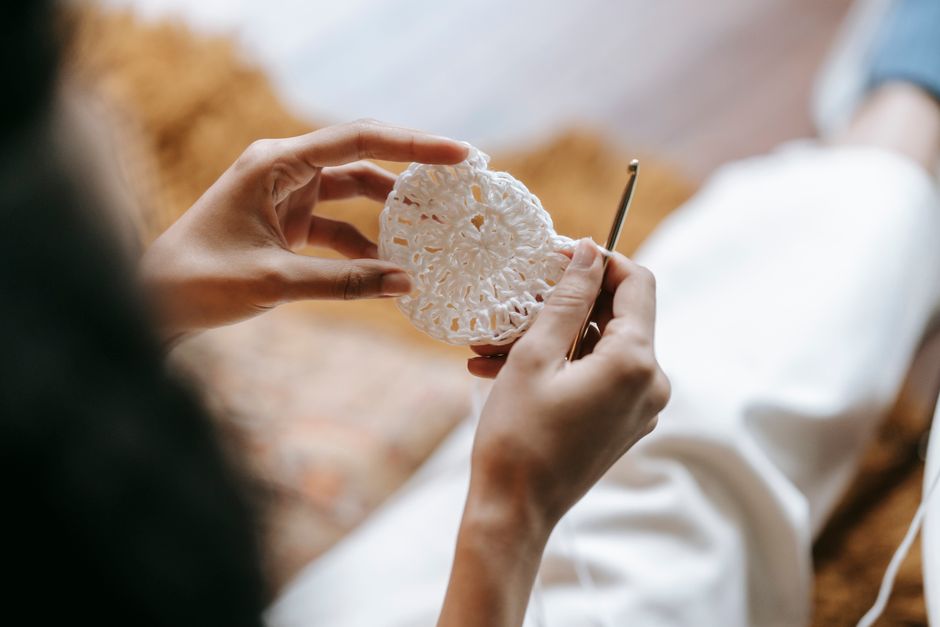
A sellable pattern is a set of instructions that predicts confusion and prevents it.
Pattern Layout That Works for Real Humans
Complex patterns need structure on the page.
Here's a layout that keeps buyers moving:
- Materials (yarn, hook, extras like wire or safety eyes)
- Finished size and gauge (gauge is the fabric tension, measured in stitches per inch)
- Abbreviations and special stitches (explain once)
- Notes before starting (construction overview, where to place markers)
- The pattern, broken into clear sections
- Finishing (assembly, stuffing, blocking)
Keep sections short. Put the tricky parts in their own subsections like "Wings" or "Collar," so buyers can find their place fast.
Add Checkpoints Like a Pro
Checkpoints prevent rage-quitting.
Use them whenever the shape matters.
Good checkpoint examples:
- "Piece should measure about 4 in wide here."
- "Your stitch count should be 36 sts."
- "Place marker at center front, you'll use it later."
- "After stuffing, the base should feel firm enough to stand."
If the design is complex, include a "common fixes" note. This reduces refunds and support emails.
Test Like You're Selling It (Because You Are)
If you want to sell patterns, you need to test them. That doesn't always mean a huge team. It means the pattern gets crocheted again, from the written instructions, without relying on your memory.
At minimum, do this:
- Put the project down for a day.
- Re-crochet from your own draft, as if you're a buyer.
- Rewrite any line you had to "interpret."
- Take photos of the confusing steps.
If you can, have at least one other crocheter test it. Different brains catch different gaps.
Price and Position Complex Patterns Clearly
Complex doesn't automatically mean "expensive." It means "specific."
Buyers pay happily when they know what they're getting:
- Call out skill level with plain language
- Show close-up photos of the tricky features
- Say what techniques are used (short rows, colorwork, joining motifs)
- Tell them how long it takes you, but keep it flexible (everyone crochets at a different speed)
If your pattern includes lots of small parts, say so upfront. Surprises are what cause bad reviews.
FAQ
Do I Need to Invent New Stitches to Make a Unique Crochet Pattern?
No. Most unique designs come from shaping, texture placement, and construction choices. Familiar stitches, used in an unexpected way, usually sell better.How Do I Stop People From Getting Lost in Complex Rounds?
Use stitch counts, measurement checkpoints, and section breaks. Also label turning points like "center back" or "start of round" with markers.Should I Include Multiple Sizes in a Complex Pattern?
Only if the design really needs it. For wearables, sizing can help sales. For plush and decor, size changes often come from yarn weight anyway, so clear measurements can be enough.Create One "Signature" Pattern First
If you want to master How to Crochet Unique Patterns for Sale, don't start by designing a whole collection.
Start with one pattern that has a clear signature feature, clean instructions, and strong photos. Build your style rules from that.
If you'd like, we can also point you toward the kind of advanced techniques that match your idea, or you can browse our pattern shop at https://artncraftartncraft.art and pick a design style to build on.